
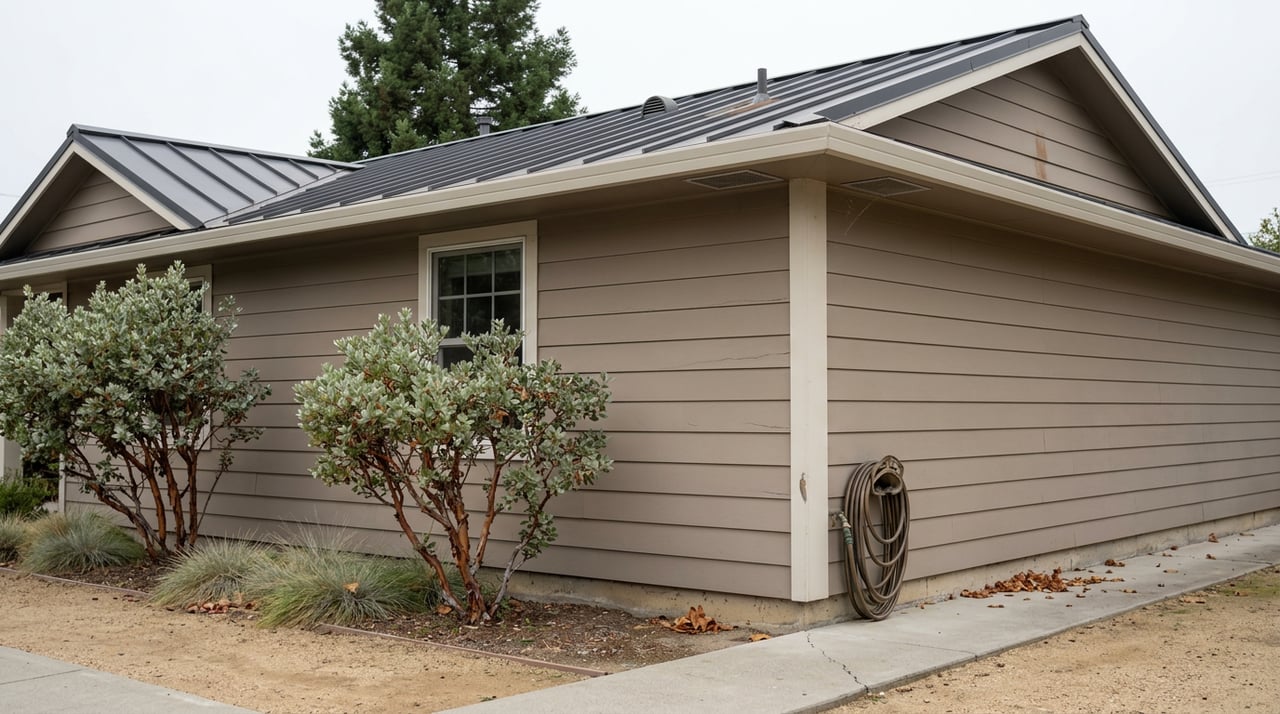
Two homes go on the market in Yreka the same week. One sits a few blocks off Miner Street, small lot, cleared yard, close neighbors on both sides. The other is a few miles out past city limits, ringed by pine and manzanita, the kind of setting that draws the hobby-farm and acreage buyers Siskiyou County is known for. Both carry the same county name on the listing sheet. Both will likely show up in a portal search with the same blanket wildfire warning attached to the zip code.
Their insurance quotes will not look anything alike. One buyer might land a standard policy for a few thousand dollars a year. The other could get pushed straight to California's FAIR Plan, pay two to four times as much, and still need a second policy stacked on top just to cover what the FAIR Plan leaves out. That gap is not a rounding error. It is the single biggest thing that can quietly stall a Yreka closing in 2026, and almost nobody checks it until they are already deep in escrow.
Search Yreka real estate and you will run into a stat that gets repeated everywhere: roughly 99 percent of properties in Yreka carry some measure of wildfire risk, enough that climate-scoring tools slap the city with a "severe risk" label. It sounds alarming, and it is technically true. It is also nearly useless for pricing an actual house, because "some risk" is a low bar. Almost every parcel in a forested county clears it.
Look at an individual property and the picture gets more specific. Current climate-risk data for one small in-town Yreka home puts its Fire Factor at 6 out of 10, translating to roughly a 9 percent chance of being touched by wildfire over the next 30 years. That is a real number attached to a real property record, and it reads very differently than "severe risk countywide." A house tucked into town, surrounded by other roofs and cleared lots, is underwriting a different bet than a parcel that backs up to open timber. Insurers know this. They price to the parcel, not the zip code, using brush density, defensible space, and vegetation as inputs a countywide label never captures.
The factors an insurer weighs before quoting a Yreka property include:
Two houses a few blocks apart can land on completely different rungs of this ladder. That is why a blanket wildfire warning at the top of a listing search tells a buyer almost nothing useful about what they will actually pay to insure the specific address they are considering.
California's insurer of last resort has been on a steep growth curve for years. The FAIR Plan's dwelling-policy count grew from about 126,000 in September 2018 to 574,000 by March 2025, according to figures compiled by the National Resources Defense Council. A year later, in March 2026, the plan had grown again, to more than 684,000 policies statewide covering roughly $750 billion in exposure, an increase of about 6 percent in policy count and 8 percent in total exposure since the previous September alone.
The next rate hike is still a moving target depending on which report you read. One filing, submitted in October 2025, sought a 35.8 percent average increase for an April 2026 effective date, with reporting on that filing suggesting roughly half of policyholders would see increases of 40 to 55 percent. A separate, later report instead cited a settled 29.8 percent statewide increase scheduled to take effect October 15, 2026, with half of policyholders seeing 30 to 50 percent increases and about a quarter seeing decreases in lower-risk zip codes. The exact figure has moved between reports, but the direction has not: FAIR Plan premiums are heading up again this year for most Siskiyou County policyholders.
Here is roughly what that looks like by property type, based on current 2026 pricing data:
| Property Type | Typical Annual FAIR Plan Premium |
|---|---|
| Standard admitted HO-3 policy, statewide average | About $1,480 |
| Average FAIR Plan policy, statewide | $3,000 to $3,200 |
| $400,000 dwelling in a Very High Fire Hazard Severity Zone | $3,200 to $4,800 |
| $1 million dwelling in a foothill county | $5,000 to $9,000 |
| Extreme-risk zip codes | $20,000 to $32,000+ |
Siskiyou County is not a bystander in this story. The California Department of Insurance's own fact sheet on residential insurance and the FAIR Plan names Siskiyou among the counties with a high percentage of dwelling units sitting in High to Very High wildfire risk zones. That designation is exactly why the gap between an in-town Yreka lot and an outlying acreage parcel matters so much here, more than it might in a flatter, less forested county.
A FAIR Plan policy only covers fire, lightning, and internal explosion. It does not cover liability, theft, or water damage. Almost every mortgage lender will not accept a FAIR Plan policy on its own, which means a buyer who gets routed to the FAIR Plan also needs a Difference in Conditions policy layered on top, sold separately, to cover everything else a normal homeowners policy would include.
For a buyer, that two-policy stack has to be arranged and approved before the lender will fund. If a buyer waits until the appraisal comes back to start shopping insurance, and the property turns out to sit in a higher fire-hazard zone than expected, they can lose weeks scrambling to find a carrier willing to write a DIC policy, sometimes past the closing date in the purchase contract.
For a seller, the risk runs the other way. California law requires at least 75 days' written notice before an insurer can non-renew a residential policy, and if the seller's own coverage lapses or gets flagged during the listing period, that can spook a buyer's underwriter even if the seller has no intention of filing a claim. A seller who has not confirmed their own insurability, or checked what a buyer's insurer is likely to see on that specific parcel, is walking into escrow blind on one of the few things that can actually kill a deal in today's market.
If you are buying in Yreka in 2026, get an insurance quote in this order:
California's Natural Hazard Disclosure requirements mean a seller has to disclose if a property sits in a mapped Fire Hazard Severity Zone. That disclosure is not optional, and buyers increasingly ask for an insurance quote before they will make an offer at all, which means the disclosure and the pricing conversation are happening at the same time now, not sequentially.
There is a real lever sellers can pull before listing. The state's Safer from Wildfires program, effective for FAIR Plan dwelling-fire policies since November 15, 2025, offers up to a 13.8 percent discount on the wildfire portion of a premium when a property has documented mitigation work such as ember-resistant vents, a Class A roof, and a compliant Zone 0 clearance. Getting that documentation together before you list, rather than after a buyer's insurance shopping turns up a high quote, keeps you in front of the conversation instead of reacting to it.
For the acreage and rural buyers Sunshine Realty 530 works with regularly, this matters even more. Properties near the wildland-urban interface, with heavier brush and less cleared defensible space, are the ones most likely to sit in a Very High Fire Hazard Severity Zone designation and land straight on the FAIR Plan ladder. That does not mean the property is uninsurable. It means the insurance conversation needs to start the same week you start touring, not after you have already fallen for a piece of land.
Does a FAIR Plan policy mean a lender will not approve the loan? Not by itself. Most lenders will accept a FAIR Plan policy paired with a DIC wrap. What they will not accept is a FAIR Plan policy alone, since it does not cover liability or theft.
Can mitigation actually move a property back to a standard carrier? Documented Zone 0 clearance, roof upgrades, and ember-resistant vents are the same things both the FAIR Plan discount program and standard underwriters look for, so the same work can pay off twice, first as a premium discount and later as a case for returning to the standard market.
How fast can insurance actually change during a transaction? An insurer must give 75 days' notice before a non-renewal, but a new quote for a buyer can come back in days. The risk is not speed, it is finding out late that a property needs the FAIR Plan plus DIC stack after a closing date is already set.
If you are weighing a Yreka listing or trying to figure out what a specific parcel will actually cost to insure before you make an offer, that is exactly the kind of local groundwork Sunshine Realty 530 does before you ever get to an insurance broker. Get a free home valuation and local market review, and we will walk through what your specific address is likely to face before you list or write an offer, not after.
Stay up to date on the latest real estate trends.


Whether you're looking to buy, sell, or invest, We're ready to help you achieve your real estate goals with expertise, dedication, and care. Contact us and make your dreams a reality.
Lenita Ramos | CA DRE# 02133572